Friday, August 04, 2006

As the Week Draws to a Close in Accra…The Unbearable Lightness of Being West African; Liberia’s 150-year anniversary; Menacing Problem of Drugs


As I write*, the 7th ordinary session of the West African Health Organisation (WAHO)has opened in Abuja, with Ministers of Health from Benin, Liberia, Ghana; Sierra Leone; Senegal; and Niger attending.

Obasanjo has talked about how 12% of his country’s budget would go towards health, but African leaders had to make more effort for it to be higher if the MDGs could be met.

On another note, however, hearing and reading the news that Ghana would start using ECOWAS passports concurrently within the country in 2007 got me thinking about the value-added from using both types. SO I did some research, and found an excellent article (http://www.thisdayonline.com/archive/2003/05/21/20030521dev01.html) that indicated that it would be with a view to phasing out the national ones. In short, it would be a way of establishing a West African (ECOWAS) identity to the world.

Though it is true to say that when, say, you arrive in Ghana, you find an "ECOWAS" line, and other national’s line, the sentiments by a popular comedian, KSM, who joked that the latter line goes faster than that of ECOWAS holds very true!

It bears reminding that the ECOWAS region is the only in the West African, where there is free movement of people, as well as the freedom to reside. Perhaps, this quote explains it best:


It is part and parcel of the Protocol for free movement of people and goods. The ECOWAS Treaty provides for community citizenship and proof of that is for an individual to own a community passport to enable them travel within the region. It is an effort to promote in a general sense of African integration through regional integration. The ECOWAS passport is a supra-national instrument for travel, which all the ECOWAS States have recognised and are asking the international community to recommend. Consequently, it is more important than any of the national passports within the West African region. The holder is not considered a foreigner, and is free to pass easily through international borders without the rigour faced by non-ECOWAS citizens. It is meant to enhance regional integration.


Personally, all these developments attest to the ECOWAS-ness, as it were, of the region. I am Ghanaian first and foremost, but I am increasingly feeling that there will come a time when I can well and truly call myself an "ECOWAS national". I am almost there, but once our leaders get their act together on Common External Tariffs and whatnot, with a view to the ECOWAS currency, the ECO, I might just feel a bit more like I am living in a region that is quintessentially West African.


To be fair, it is great to see that in a country like Ghana, a number of NIGERIAN banks have made their home: Zenith Bank (it even has a hotline now!-- http://www.zenithbank.com/); Standard Trust (http://www.standardtrustghana.com/); and Guaranty Trust Bank (http://www.gtbplc.com/portal/index.pl?id=35020), but it would be great to see a more concerted effort elsewhere other than the banking sector on regional integration.

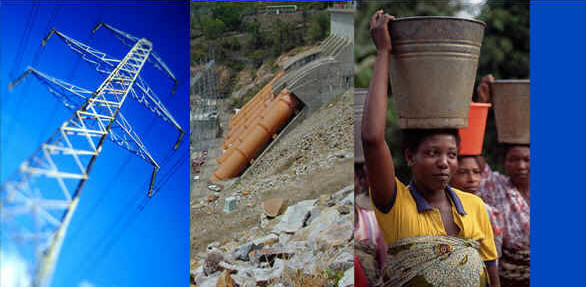
Speaking of which, you must have heard about Liberia, and the celebration of 150 years of its independence from the US. Well, suffice to say, Ghana played an instrumental role in facilitating the developmenmt of Liberia’s electricity.

Perhaps, the Statesman newspaper put it best in its editorial, entitled "West Africa is our oyster" when it wrote:


"There is no way that West African countries can compete divided. But the policies at the ECOWAS level must be boldly translated on the ground by the private sector. What the V{olta} R{egional} A{uthority}, Government, Databank, Cal bank, Tropical Cable, etc, have shown is that a combination of the public and private sector can make Ghana ruthlessly competitive in West Africa and beyond."


I am highlighting, briefly, what the-above organisations did (the information was culled from the Daily Statesman newspaper, a government-supportinig newspaper):

Databank Financial Services, Ghana’s premier investment bankers, went to work to structure the financing and provided risk cover to secure a loan of $1m from Cal Bank to fund the project
• Next were the supplies. All in all, Liberia bought 1,200 light poles, the electrical wiring and four power generators, from Ghanaian companies in May, while VRA technicians were seconded theer to train local personnel, renovate and connect the system
• Ghanaian entrepreneur Tony Oteng Gyasi’s "Tropical Cables and Conductors Ltd", a Ghanaian leader in manufacturing, procured the cables needed for the transmission wiring
• The wooden poles and stay blocks were provided by Du Paul Wood Treatment (Gh) Ltd, a Ghanaian firm run by former Bank of governor, Kwabena Duffuor
• The huge generators to provided the power for Liberia’s Capital city were also provided by a Ghanaian company, G&J technical Services Ltd., owned by Godfrey Asiedu

The culmination of all these concerted efforts went to provide electricity for Liberia, a fellow ECOWAS country. Whilst the Statesman newspaper feels that this highlights the need to push for private sector led by Ghana, I am more of the view that it accentuates the possibilities within the region of a greater collaboration.

Sure, ECOWAS may be divided politically on issues of the free trade agreements with the EU over Economic Partnership Agreements, and it is something that requires urgent attention in the sub-region, but, without a doubt, this could be the beginning of something better in ECOWAS.

The Drug Menace
Like a scene right out of Hollywood, the drugs affair exploded into the consciousness of Ghanaians a few weeks ago when some drugs disappeared off a boat, MV Benjamin, when it docked at Tema. Unlike in the 1995 gangster thriller, The Usual Suspects, where $91 million of cocaine in a boat, docked at a pier in South Pedro, just south of L.A., exploded along with the boat, in Ghana, the boat, containing many millions of dollars worth of cocaine, simply disappeared—without a trace.

That is until the revelation of complicity over the drugs, followed by the swift arrest {on the orders of Attorney-General/Minister of Justice Joe Ghartey) of four putative drug barons two days ago at a public hearing under the aegis of Justice Georgina Woode’s eponymous committee that had been set up to look into the disappearance of the 77 parcels of missing cocaine.

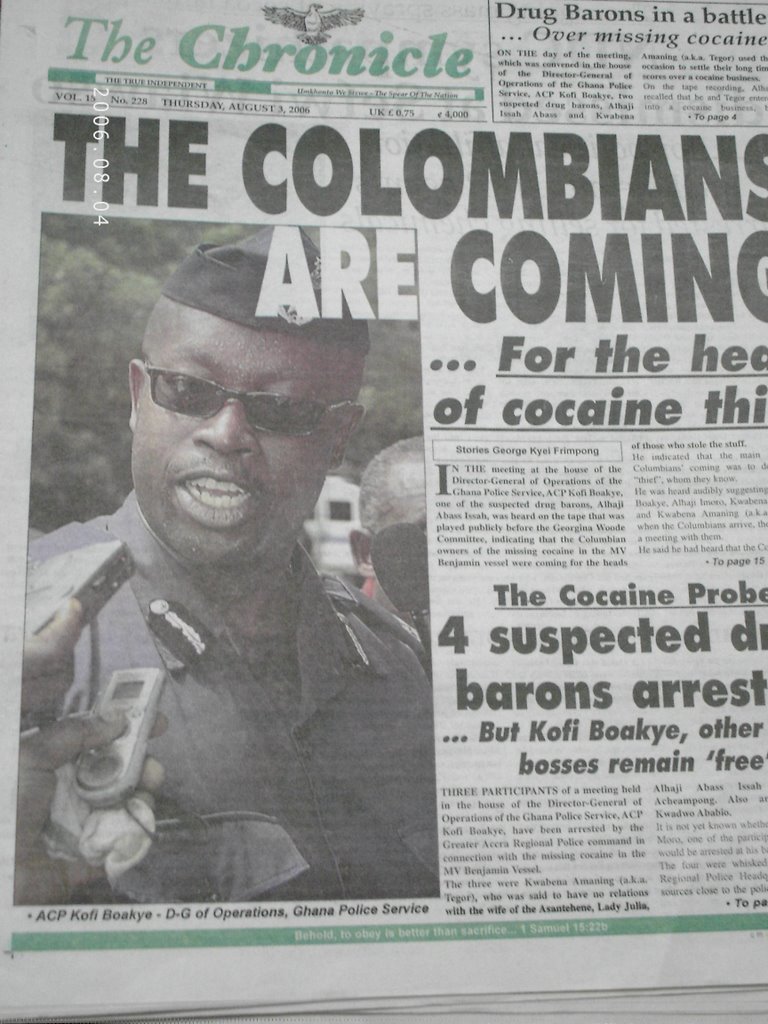
One Assistant Commissioner of Police (ACP) Kofi Boakye, a charismatic director of police operations, was caught on tape in a discussion with some of these barons {in what the Chronicle entitled "Kofi’s Convention with Drug Barons", which you can read here: http://allafrica.com/stories/200608020897.html }, and now proceeded on leave with immediate effect.

Perhaps, I have done a great disservice to the multiplicity of events that have unfolded in between, simply because I am not seeking to re-hash what the press has said, but merely to give one a bigger picture about the drug menace, and how it is threatening to engulf the Police Service in a maelstrom of yucky finger-pointing tags of corruption. If you want more information, please go to this link here: http://news.google.com/news?sourceid=navclient&ie=UTF-8&rls=GGLG%2CGGLG%3A2005-34%2CGGLG%3Aen&tab=wn&q=Ghana+drugs+; and http://www.ghananewstoday.com/gnt_cn_detailb.cfm?tblNewsCatID=51&tblNewsID=1097.

As I pretty much intoned two weeks ago when the popular musician, Daasebre, was caught in London, it’s pretty much time that the sub-region looked more closely at the formulation of an anti-drugs policy. Ghana is now incontestably a transit point for drug smuggling. Incidences of abuse may be low as compared to other countries, but I really do hope that people do not begin to see that stability, or being an "island of peace" is going to operate against the country in the most nefarious manner.

Food for thought: news in this morning from the Chronicle, indicates that "More cocaine arrives - Another £1m worth intercepted at Dabala". Read it: http://www.ghanaian-chronicle.com/thestory.asp?id=11086.

This time, it was a cross-border (ECOWAS) crime. Enough said?

*the section on Liberia was written last week

Wednesday, August 02, 2006

The Middle East Reminds me of Why the Fight Against Injustice Continues

Ok, so it’s still been a long time. I hope you’ve been doing great. You’ve been visiting the site but not commenting:-( Well, here’s some food for thought.

Tensions in the Middle East have facilitated some free-thinking, as it were, by many including the BBC, which intoned last week that the Iraq War was comparable to that pet topic of mine—the Suez crisis of 1956--where Nasser the nationalist asserted himself at the expense of the interests of his country by simply nationalizing the Suez Canal, which was key for trade for the Brits and the French.

So, this is what the Brits and the French did in order to protect their interests.

For the Brits, "collusion with the two was a way of re-establishing a hold over one of their most prized colonial assets -- the Suez Canal -- that had provided them with considerable economic leverage for many decades since the 1880s. As Stoessinger writes, "to Britain, control of the canal symbolized her status as an empire and as a world power."

For the French, "their justification was predicated on the belief that Nasser was helping fund "the Algerian rebellion against France."

This is how the BBC describes the genesis of the plot:


"Israel was longing to have a go at Nasser anyway because of Palestinian fedayeen attacks and the Egyptian blockade of the Straits of Tiran.
The ruse was that Israel would invade Egypt across the Sinai peninsula.
Britain and France would then give an ultimatum to the parties to stop fighting or they would intervene to 'protect' the canal.

And so it played out. The Israelis even had to moderate their attack in case they won before the 'intervention' forces could arrive. But the British and French went in to 'save' the canal.

There was only one thing wrong. Eden had not told the Americans.

From: http://news.bbc.co.uk/2/hi/middle_east/5199392.stm


I won’t bore you so much about the Americans except to say that the Americans were not amused. Eisenhower played a rather principled stance; the UN got involved under the aegis of the charismatic Dag Hammarskjold. The first-ever UN force—UN Emergencey Force—was deployed after the UN SG condemned the pusillanimous acts of the tripartite ruse of Israel-Britain-France. Eventually, the UN troops would supervise the gradual withdrawal of the Israelis and monitor the border between Egypt and Israel.

The regrettable and sinister element in the conflict, I wrote, was that "that considerable attention was diverted towards bringing British, France and Israel to heel, to me indicates that whilst the latter three were scattering into the woodpile like rats, the big Russian bear was walking back to its cave scot-free. In the end, the irony of the Suez debacle is that as the noise of the rats ducking for cover reached fever pitch, neither the roar of the Stentorian US nor the strong urges of the UN were able to do anything to help Hungary as it burned"

While the Suez crisis may be all well and good, I am more comfortable looking at how current crisis in the Middle East resonates with that of the Crimean War that ended in 1856, with a Treaty of Paris.

The Crimean war, in sum, saw the demise of the Russians in South East Europe, and secured the definitive demise of the so-called Concert of Europe – a kind of historical prelude to the UN’s Security Council -- that had kept the peace from 1815-1856.

Why that is significant is that it brings home the Russian factor, which I would like to broach very quickly.

I am sure you may re-call that in January, Russia cut supplies to Ukraine in a row over prices. Russia has a monopoly over Gazprom, and in April – in a far departure to the situation during the Crimean war of 150 years ago when the Brits became so Russophobic it was not funny – made explicit its plans to take over British-owned Centrica.

I think you might speculate that the Russians are at their peak, considering how the Blair government is also keen to promote the further opening of its markets. The BBC reported that the UK’s Trade Minister Alan Johnson said "Whatever the difficulties and challenges of globalisation, the answers will not be found in the stagnant waters of protectionism,"

Privatisation versus nationalisation

A lot of people might think that is a true point; I beg to differ. It is interesting, in my view, to note that the nationalisation of Nasser in 1956 runs in serious askance to the privatisation of the UK government over its state-owned Centrica, among many things. Can you, however, imagine that the UK government has been actively pursuing the privatisation of it National Health Service (NHS)?

I can hardly believe how increasingly neoliberal the UK government under Tony Blair is becoming.

More on that later…

What, for me, is symbolic is the progressive forces that I see at work in the world. I find it rather ironic that exactly sixty years after the beginning of the Spanish Civil War, that saw the unleashing of progressive forces and alliances, we find in the same month of July similar progressive forces rejoicing over no less than the collapse of the talks of the World Trade Organisation.

Let’s face it: you cannot talk about the fight against imperial tendencies of, say, the United States over Iraq, without taking a critical and reflective look at the policies of the WTO, the IMF, and the World Bank.

Boring, maybe, but suffice to say that those are the quintessential axes of evil.

From a historical perspective, 2006 has been a year when privatisation –both in the domestic and multilateral level – has been high.

The rather technical yet menacing acronym of GATS, or the General Agreement on Trade in Services (http://www.gatswatch.org/) is, in effect, ...


...an international trade agreement that came into effect in 1995 and operates under the umbrella of the World Trade Organization (WTO).

The aim of the GATS is to gradually remove all barriers to trade in services. The agreement covers services as diverse as banking, education, healthcare, rubbish collection, tourism or transport.

The idea is to open up these services to international competition, allowing the way for huge, for-profit, multinational firms.

"The GATS is not just something that exists between Governments. It is first and foremost an instrument for the benefit of business"

European Commission, 1999
Since February 2000, negotiations are underway in the WTO to expand and 'fine-tune' the GATS. These negotiations have aroused concern world-wide. A growing number of local governments, trade unions, NGOs, parliaments and developing country governments are criticising the GATS negotiations and call for a halt on the negotiations.


In India, as I write this, India is being asked to open up its legal service for foreigners to compete and many more are sure to come—most probably in camera and without public scrutiny.

The biggest threat around GATS is that it forces a locking-in of privatisation. If a country changes its mind to, say, open up its health sector to the WTO, it would have to compensate ALL of the WTO members. If you are an industrialised country, you might be able to afford it, but it would still cause a heavy strain on your budget and economy, no?

At our conference at the plush South Africa 4* star Cresta Royale Hotel (ironic, no?) the week of 17th July, Pete Hardstaff, Head of Policy at the UK-based World Development Movement argued how privatisation was being pushed very forcefully by Europe.

Whilst there are many on the European continent, one particular one I referred to earlier is that of the privatisation of the UK’s health sector under the NHS. The Socialist Worker, among many papers, has reported extensively on this. For them, it has underscored the neoliberal ideology of Tony Blair.

So alarming has this latest privatisation drive been that, in an attempt to forestall, or counter it, a website has been created to fight it: http://www.keepournhspublic.com/newsroundup.php

Latest reports from today’s press indicate that the American firm (Texas-based!!) that was handed the ₤4bn NHS contract was investigated for overcharging. It has set its sights to take care of purchasing and distributing everything "from bandages to hip implants."

So, in the long run, what are the lessons here for us, small people?

I think that history reminds us of the myopic interests of leaders. Suez was one; Iraq is another. As to whether the parallels drawn can only go to underscore the perfidy, or treachery, of our governments when they decide to go a-filibustering, and particularly when it blows unceremoniously in their face, is moot.

What we, as citizens, might remember is that no matter where we are, no matter our background, the fight for global justice everywhere becomes meaningless unless it is linked with the total disjuncture of global greed—be it at the multilateral level or the governmental one anywhere

Tags: privatisation; Global justice

Thursday, July 20, 2006

On Petroleum Prices and the Ghana Government

It is an article of irony that the very week that my organisation is discussing the liberalisation of services under the World Trade Organisation, and the adverse impacts it will have on gender, development, and community rights at our Pan-African meeting is the same time that the government allows so-called Oil Marketing companies, which I wrote about back in 2005 when I attended a meeting in which the then-Minister of Energy Professor Mike Ocquaye extolled the virtues of liberalising the downstream sector of Ghana's petroleum sector, to raise petroleum prices from 10-15%.

All this simply goes to confirm the increasingly neoliberal stance that the government of Ghana is adopting to its people.

Now that the rate of petrol is at exactly $US5.00/gallon, how are Ghanaians supposed to manage? Where are the safety nets in place that the government should be thinking about to cushion its citizens from the effects of the world market? SO, just because there is a serious inter-necine conflict going on in the Middle East, where Hezbollah is being targetted for wiping out by the Israelis, so we, in the developing world, have to suffer the consequences?

Now this issue was, thankfully, raised by Bernard Avle of the CITI Breakfast Show the beginning of this week, which was great.

Having said that, as much as I praise CITI-FM, I really think that the media does woefully in presenting to the public key issues, such as the challenge of liberalisation of services.

Liberalisation of services is merely a big word for opening up the services sector (tourism, finance, banking, waste disposal, etc) to the degree that foreign investors can come into this country--and any other developing country--and enjoy "national treatment"(in ther words, the same type of treatment and beenfits accorded indigenous enterprises) and tax exemptions so that they can charge fees on the locals, and expropriate (take away) profits from this country to theirs, or simply offshore, and out of this country. Much like the telecommunication companies of AREEBA and TIGO do. Didn't know? Now you do...

The question is: to what extent can public opinion be awakened to the urgency of these issues by way of the media, without it necessarily coming from civil society activists, like myself, who already are perceived in one way or another by policy-makers and the media alike for having more time on their hands than the media.

I think Dr.Graham, Coordinator of TWN-AFrica, hit the nail on the head when he...


...called on the media to offer analysis of the law governing the provision of services and generate debate that would enhance major transformations of the service sector
from: TWN discusses challenges of service liberalisation.


My final point is this: liberalisation and privatisation has been with us since the Reagan-Thatcher nexus, which in my view, was "the greatest exponent of a modern and amoral Realpolitik", as maintained by US historian Norman Rich in his classic book "Great Power Diplomacy".

That said, with the increasing and growing appetite of the US and EU for African markets on water, health and whatnot sector, they threaten to LOCK-IN permanently any commitments our clueless and hapless and uninformed African governments may be faced with.

The time for resistance against this locking in of liberalisation, or forever facing compensation of ALL WTO members is nigh...unless Africa wakes up -- seriously.

TAgs: Ghana liberalisation; Ghana petroleum; services liberalisation; services

Thursday, July 13, 2006

Is this Ghana's Middle Class?--Part I

In a post reminiscent of the one I wrote last year -- 6 July, 2006 to be precise -- which you can read here: http://ekbensahinghana.blogspot.com/2005/07/when-radio-managed-event-turned.html, I had the opportunity to be...


...on Wednesday evening around 9.30pm at the Coconut Grove Regency Hotel, located "within 3-6 minutes drive of USAID, the World Bank Office, Danish, Canadian, German, Swiss, Nigerian and American Diplomatic Missions, Ghana Immigration Service and National Theatre, Government Ministries and the Accra Intentional Center, all on “traffic free” routes."(from: http://www.coconutgrovehotels.com.gh/Regency/regency_index.htm on private business with my parents when I heard feedback from the car's radio as we approached.

It was CITI-97.3FM--the Accra-based English speaking private radio station, which you can listen to in crystal-clear quality wherever you are in the world (I know, cos people from Germany and the UK have been calling in the 8.45am regular phone-ins to the CITI Breakfast Show; and listeners send emls from South Africa and the US!)--hosting its weekly Wednesday Salsa Mania event, where Latin American tunes are played, and people get FREE Salsa lessons.

Now whilst PAID Salsa lessons would be a better gauge, or indicator, of people being middle class, or not, I could not help but wonder at my perception of "middle class", which has preoccupied me since I arrived back home in Ghana in August 2004.

Let me leave you with this quotation, which I used in that entry to describe middle class:


The middle class (or middle classes) comprises a social group once defined by exception as an intermediate social class between the nobility and working class folk.

Since the working classes constituted the vast majority of the population, the middle classes actually lay near the top of the social pyramid.

Modern political economy considers a large middle class to be a beneficial, stabilizing influence on society, because it has neither the explosive revolutionary tendencies of the lower class, nor the stultifying greedy tendencies of the upper class.

www.encyclopedia4u.com/m/middle-class.html (239 words


A lot of people -- usually Westerners -- who come to Ghana for the first time either out of lack of deliberate discerning about the country, or mere foolishness believe that Ghana is a country of extremes, where there is the poor and the very rich.

Whilst I will not be the first to say that poverty may be rising in unseen areas than we know in this country, I think I can also emphatically say that visibly, what I have perceived about Ghanaians is that by way of so many changes in the political system and otherwise, we see changes in people's income (by way of the number of provate cars on the road, etc) that can lead one to assume that there is a growing middle class.

I spoke to a taxi driver two weeks ago who praised the incumbent administration, insisting that they had done very well, because even policemen could, from their UN missions overseas, come back and obtain loans to get cars, etc, whereas that was not the case before.

It got me thinking about the ramifications of the possibilities of obtaining loans as an indicator of "middle class". Teachers, for example, in the West are considered middle-class (whether lower or middle is a moot point), but it's clear to many that their education, coupled with their ability to obtain loans to buy a house and car makes them middle class. A labourer does not get that designation by any stretch of the imagination, though labourers can afford to buy Mercedes also! Their work is esssentially working class.

But can one not argue that that they can also obtain loans for cars, and houses, make them middle class? But that's another story...

I was pretty outraged--not just peeved--when the other day, I came across a website by one "Howie Klein", who had a story featured about one Adam's trip to Ghana. This is what Adam wrote:


I am in a small village called Kwamoso in the Akuapem Hills Region. The village is extremely rural with no electricity or running water. Compared to middle class America these people are dirt poor but they are Ghana's middle class. They live in houses literally made out of mud with tin roofs. In many the mud walls are coated with a layer of cement but not all. The poor live in houses with straw roofs and the mud walls look like they are crumbling...
--from:http://aroundtheworldblog.blogspot.com/2006/06/total-immersion-six-weeks-in-ghana.html


How can this description possibly befit middle class Ghana? I mean, when I talk about Westerners being foolish, this is one of them. The cultural relativism is just a bit distorted. People with no electricity or running water--how on Earth can they ever be middle class--anyhwere?

I suppose that is what propelled my desire to comment on Ghana and middle class, which, for me, is a dicey issue, which deserves a lot of rumination, and treatment. For now, though, I think I will leave you with this interesting definition from wikipedia:


  • Achievement of tertiary education, including all financiers, lawyers, doctors and clergymen regardless of their leisure or wealth.

  • Belief in bourgeois values, such as high rates of house or long-term lease ownership and jobs which are perceived to be "secure." In the United States and in the United Kingdom, politicians typically target the votes of the middle classes.

  • Lifestyle. In the United Kingdom, social status has been less directly linked to wealth than in the United States, and has also been judged by pointers such as accent, manners, place of education and the class of a person's circle of friends and acquaintances. Often in the United States, the middle class are the most eager participants in pop culture. The second generation of new immigrants will often enthusiastically forsake their traditional folk culture as a sign of having arrived in the middle class.

  • A net worth, what a person's total material assets are worth, minus their debt. Most economists define "middle-class" citizens as those with net worths of between $125,000 and $250,000. Those with net worths between $250,000 and $500,000 typically are categorized as upper middle class. Those with net worths below $125,000 can be further broken down into working class to lower class.[1]

  • from: http://en.wikipedia.org/wiki/Middle_class


    While this definition is positively Anglo-Saxon and Anglo-Centric, I think there are elements for cogitation that transcend Western perception of middle class.

    Whilst you are at it, you might want to take a look at the guy wearing the tie to the left of the picture. Asset#1: mobile phone; Asset#2: probably a car costing millions of cedis;-)

    Definitely middle class dontcha think?

    Useful and Related links


    http://www.ghanateachers.org

    tags:Accra; Middle Class Ghana

    Friday, July 07, 2006

    As the Week Draws to a Close in Accra:Thoughts on an ECOWAS Regional Police Organisation (FBI?), and Combatting the Narcotics Menace

    The week opened with drugs on my mind: a popular musician, Daassebre, who had been caught with two kilograms of cocaine in the UK. It prompted a radio discussion on Tuesday as to why so many Ghanaians want to defy the risk of carrying narcotics into European soil. I called in and made a contribution, which I can summarise thus:


    There are two levels we have to be looking at this. There is, first, the local level.

    At the local level, we should have a billboard at Kotoka International Airport (KIA) that states explicitly that Ghana is a no-drugs country. That always helps, plus the one thrown in for good measure that Ghana is a strong partner in the fight against drug-trafficking. We should also be building the capacity of officials at GCAA (Ghana Civil Aviation Authority) to be able to have a good idea (discerning eye) for those who might want to take drugs out of the country, or bring it in. If this means going on courses overseas, then fine!

    At the sub-regional level, I maintain that there should be an ECOWAS Convention on Combatting Drugs in the same manner there is one on small arms to the degree that the Kimberely Process on Blood Diamonds has eventuated from it. I also think that one should go back to the discussions back in 2002 when ECOWAS Police Leaders met (http://www.iss.co.za/Af/RegOrg/unity_to_union/ecowasprof.htm), and this was discussed:

    Plans for the establishment of a regional criminal investigation and intelligence bureau were considered at meetings of the ECOWAS Police Chiefs on 23 September 2002 and the Interior Ministers on 26 September 2002 as part of efforts to combat cross-border criminal activities

    There is after all a West African Police Chiefs Committee (WAPCCO), but few people know of this! What about a website detailing activities to inspire some degree of confidence in ECOWAS Citizens! My main beef was that ECOWAS should be thinking back to the ECOWAS type of FBI, or more specifically, a regional criminal investigation group—unprecedented in Africa. It is not beyond ECOWAS! And a very serious point is that once you have these anti-narcotics ECOWAS Police officers fighting narcotics on the sub-region, you have to ensure that they are HIGHLY-PAID, so as to ensure that they do not feel tempted in partaking in the proceeds of those whom they catch. Seeing as we are dealing with the human condition, we will always get rotten apples, but they should be few and far between.

    More: http://www.google.com/search?hl=en&lr=&rls=GGLG%2CGGLG%3A2005-34%2CGGLG%3Aen&q=%22West+African+Police+Chiefs+Committee+%28WAPCCO%29%22


    I was, truthfully, disheartened that the host, Bernard Avle, did little to touch on the issue, but it is something I would like to pick up on again. Attacking the menace of drugs at so many levels is, in my view, a more concrete way of ensuring that we touch it at the root.

    What do you think?

    Have a good weekend!!

    ; ; ;

    Friday, June 30, 2006

    As the Week draws to a Close in Accra: Thoughts on Regulating /Complaining about Water, Electricity; Air Quality in Accra Deteriorating


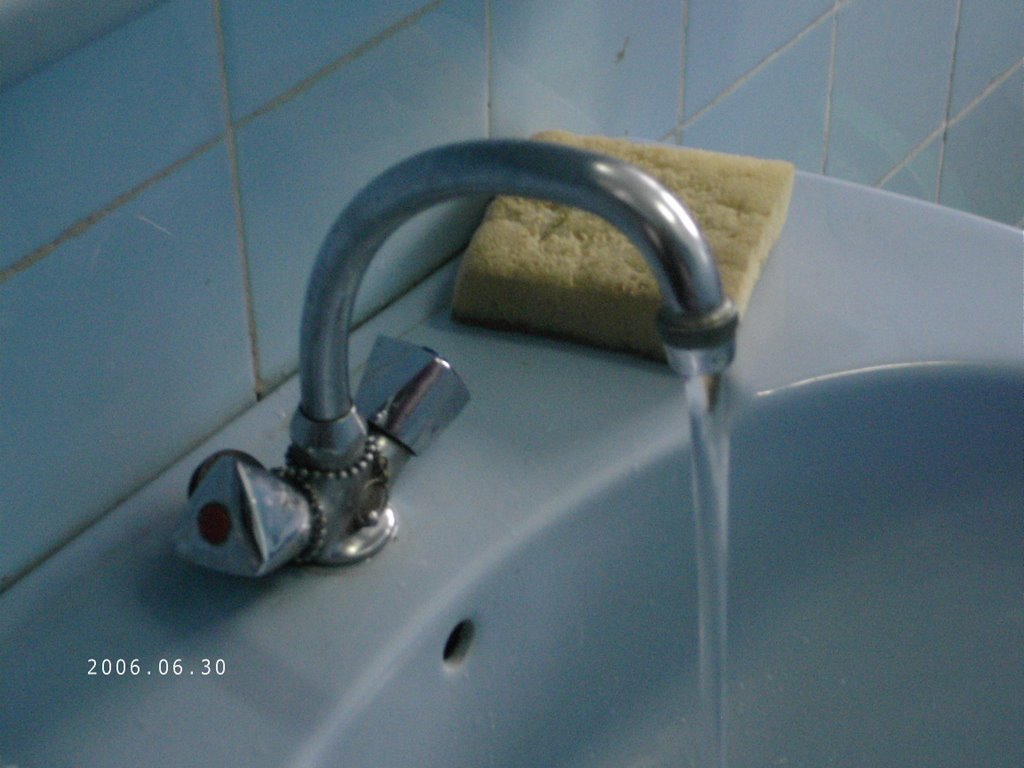
    I spent the better part of my lunchtime trying to chase down Ghana Water Company and Electricity Company of Ghana. Actually, I only managed to get hold of GWCL, whilst making a complaint about ECG.

    My primary beef with GWCL was that they had switched the water off in my residential area since Monday evening, and it had not come back up until today, Friday, 30 June. Were they waiting for the Black Stars to come home before they switched it on, or what?


    I pointed out that unlike ECG, who at least inform the public that they will cut the electricity off for maintenance work, those people at GWCL don’t even have the decency to inform us. Why was that?

    When I spoke to the woman at GWCL, she asked me to hold on. Prior to that, she explained that "oh, I didn’t know", triggering much bemusement with me.

    "You did not know??!", I wondered curiously, "then why didn’t you check?".

    I had to repeat myself to the so-called foreman, who spoke with me about the issue. He said rather emphatically that "when we switch the water on, as far as we know, it has come on, so it should be for you to tell us."

    "But not everyone likes to call—besides it’s expensive—so it should be you who should check with us."

    He didn’t seem to understand, so I left the issue, and said "yes, yes", just to shut him up.

    For us, the consumers, to call? What on earth?!

    Then I remembered that two days earlier, I had tried to call the Public Utilities Regulatory Commission (http://www.purc.com.gh),located downtown in Accra. They had given me one number to call.


    Thankfully, the bright voice of a young lady answered today, and she said that she could help. I detailed my complaints—that for the past two weeks, ECG, without any warning, has been switching the electricity off indiscriminately, and very much to a lot of people’s chagrin.

    I wanted to know exactly what methods of redress would be given to me, especially as ECG was, before the World Cup season, informing us on the radio, etc.

    She explained that they would take my particulars—phone number, name, etc—and call the district engineer in my residential area. They would then try to establish what the problem was. If he knows, then he tries to explain why it is happening, and what can be done about it. If not, then they will check their equipment.

    She promised to get back to me. I certainly hope she does! If not, especially with the celebration of 1 July (republic day tomorrow), and "consigned" till Monday as a public holiday, I am deeply afraid that they might pull an indiscriminate lights-off on us.

    I wondered whether there was no hotline, and she claimed the number I had called was the hotline, and that they regrettably do not work on weekends, but at least during the week, they work from 8-5pm.

    I asked her surname, and she wondered whether I was a journalist…I wondered whether I should not put their names. Should I? SHouldn’t I? Maybe, if they knew a "journalist" was complaining, they might be more serious, or…???:-)

    Whatever the case may be, I will DEFINITELY be getting back to them. I really do hope PURC prove to me that they can be an effective regulatory body—not just a toothless one!


    In other news, in the web excellence awards of the Kofi Annan IT Centre for Excellence (http://www.aiti-kace.com.gh) that took place yesterday, CITI97.3FM took home the award for the best news website. Kudos!!

    Health Watch
    Doctors , "of the Korle-Bu Teaching Hospital, who recently staged a strike action over delay in the implementation of a new salary structure, have been paid their June salaries under the new structure, which has replaced the Additional Duty Hour Allowance (ADHA)" (from: http://www.ghananewstoday.com/gnt_cn_detailb.cfm?tblNewsCatID=32&tblNewsID=473

    [I guess as proof of PURC’s investigation, I actually just received a call from the lady I spoke with who wanted to verify which residential area I was talking about, as she was being queried when she made some calls. I am impressed!]

    Other health news is that:

  • Health institutions are being encouraged to "provide space" for herbal practitioners, which is great news for a population that relies a great deal on the latter, and cannot always afford the private, or let alone, the NHIS-subsidised healthcare, which is selectively free.
    From: http://www.ghananewstoday.com/gnt_cn_detailb.cfm?tblNewsCatID=32&tblNewsID=530 There is, in fact, a 142-page manual out, that "would enable the country to develop safe and efficacious traditional and herbal medicines of international standards and of health, economic and social benefits to the people". Good stuff!

    On other health news, disturbing reports reaching CITIFM’s news was the air quality in the capital of Accra is deteriorating as a result of "indiscriminate burning of materials, particularly plastics in open spaces." From: http://www.ghananewstoday.com/gnt_cn_detailb.cfm?tblNewsCatID=32&tblNewsID=470

    Most noteworthy from the report is that:

    • "The worst destruction to the air currently is from vehicle emissions, which is really affecting the health of a lot of people living around major roads such as Kaneshie First Light and East Legon due to the huge emissions,
    • The level of particulate matter within the ambient air was quite high and was affecting human health seriously, hence the need for caution

    It would be the Environmental Protection Agency that would come out with this warning last week, warning residents of Accra of "an increase in cases of respiratory tract infections; headaches and cancers".

    Have a good weekend, and enjoy the Brazil-France game on Saturday at the ongoing FIFA 2006 world cup that has seen one controversial referee, Graham Poll, return home. Will the game be redux 1998, when Brazil was defeated at the hands of the French?

    enjoy!

  • Wednesday, June 28, 2006

    Post Mortem of Ghana's Defeat at the Hands of Slovakian referee, sorry, Brazil


    It is an article of a combination of luck and how far I have gone with this blogging enterprise to see that no less than the BBC (http://www.bbc.co.uk/blogs/worldhaveyoursay/2006/06/what_do_you_want_to_talk_about_2.html) checked out this blog (http://ekbensahinghana.blogspot.com). The reason being for visitors to see for themselves the video commentary I captured of the jubilation by Ghanaians of the USA defeat by the West Africans, which you can see here.

    All the world cup footballers so far might just be laughing all the way to their bank, but understandably, in varying degrees.

    Ghana’s Black Stars will definitely be some $10,000-$20,000 richer for the games they played but, without a doubt, they remain heroes—just by virtue of the fact of having faced one of the stiffest challenges in the name of Brazil.

    The commentators suggested they gave Brazilians a run for their money. At times, Ghana managed to penetrate – and dominate – the Brazilian defence, albeit wastefully. But that’s okay.

    Had it been any other team other than my own, I would have rooted for Brazil. But that’s okay, too.

    Despite the unnecessary chutzpah of non-pundits like myself of the game over a possible win against Brazil, I think deep down, most believed it would be tough facing a team that not only played a bit like us, but possessed a more skilful technique, associated with an unrivalled experience.

    In my final analysis, I reckon the failure of Ghana in beating the Brazilians, whilst that prospect was a non-starter for many observers, was a good wake-up call to a creeping complacency that surrounds any debutante of a global game like the World Cup that advances to the degree the Black Stars advanced.

    Failure reminds us that success is a process, and the process, by way of the African Cup of Nations, which Ghana will host in 2008, may just be what the country needs to remind itself that our debutante performance could be a lot, lot better.

    Finally, is sport writing just not fantastic writing?
    Video Commentary: Check Brazil's Offside Goals for YourselfIn a somewhat characteristic move of mine, I ensured this time to capture the Accra-based TV3 late news on the defeat of Ghana by Brazil. Everyone in this country admits that Brazil would have gone through, but the incessant manner in which yellow cards were drawn by the Slovakian referee--not to forget his evidently partial attitude towards Brazil's (two) offside goals did not help show how well Ghana played. Check the video out for yourself. The file was originally 19MB, but I needed to convert it to .WMV in order for it to not clog the blog. Hope you can hear the commentary, and see the pictures. Thanks!

    Powered by Castpost

    Tuesday, June 27, 2006

    Ghana's Coming Home, but Brazil Stole Two "Goals"


    The Brazilians played a relatively good game, but it was not, according to Barry Lambert the commentator, a Brazilian team that could not be beaten.


    Ghana took more shots than the Brazilians, but the latter scored more.


    That two goals were allowed by the Slovakian referee when the Brazilians were offside did not help matters for Ghana.


    Check the Guardian’s comment:


    44 mins: Brazil 2-0 Ghana Injustice! Lucio charged forward and fed Cafu down the right. He centred to Adriano, who tapped it home from a clearly offside position! Another scandalous decision in this increasingly farcical World Cup.

    From: http://football.guardian.co.uk/worldcup2006/minbymin/0,,1788429,00.html


    A lot of people maintain the “officiating was bad”. Others say execrable; others “racist”.


    It’s not so much that this team lost, but more of a presaging of what is to come—that because of the potentially racist referees, Africa stands little chance of winning the world cup.


    Some of our players missed huge ones—Asamoah Gyan being the biggest, having missed at least three, but Brazil scoring was no news. We were hoping we could have equalised. Oh well. Someone has to lose. We lost—not so lucky!


    Till 2010!:-)

    Monday, June 26, 2006

    Yahoo Questions Live: Can Ghana Beat Brazil?

    Check this out!


    http://answers.yahoo.com/question/?qid=20060626094133AAb0Uhx&r=w#NbUvWje9UDkX5mG2nLfc


    This is my version. Whip me when I get it wrong:


    By the way, Ghana beat Czech 2-0; the USA 2-1; so I am reckoning by by seriously flawed and unscientific mathematics. that it will be Ghana 2, Brazil 2. But seeing as good things happen in threes, we will win on penalties!!:-))


    Okay. Kudos for chutzpah, no??;-))

    Friday, June 23, 2006

    Video Commentary (TV3): Black Stars Victory Against US Trigger Jubilation

    well, what else can I say? I captured this from the late (11pm) TV3 news of jubilation in the streets as Ghana Booted the US out. The Accra Mayor jumped for joy, as did many who believe Ghana has blazed the trail for Africa...enjoy!

    Powered by Castpost

    Thursday, June 22, 2006

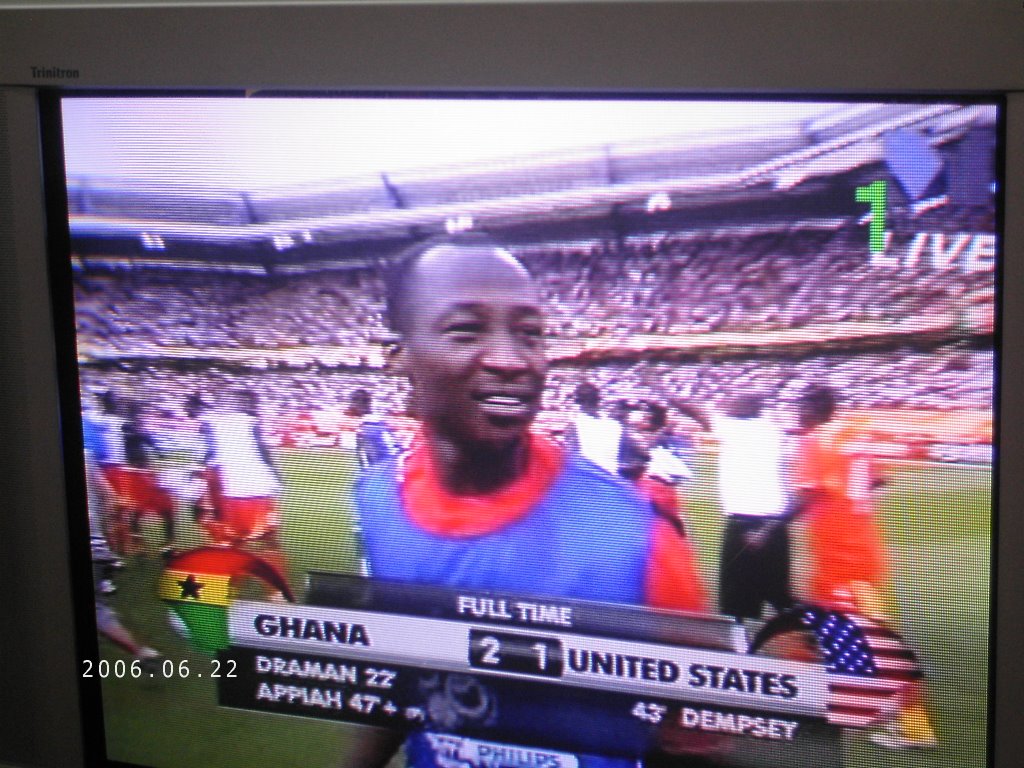
    Ghana 2, USA 1--Redux : David Meets Super-Sized Goliath


    I’m just listening to commentary from my favourite Accra-based radio station (http://www.citifmonline.com) CITI97.3FM, which you can listen to online in crystal-clear quality. And as I sit at my desk, the cool wind blows, and I hear cars honking their horn in staccatos of one, two, three. We may be playing against the Brazilians.

    The USA are out (the staccato continues), prompting a comment from my colleague that the car’s battery “is gonna die isn’t it”?

    Someone shouts. Many hearts pound relentlessly.

    As if in a dream, work resumes, but is it at its normal pace?

    Ghana, the wrongly-speculated underdogs have transformed from football Lilliputians to the quintessential Black Stars of Africa who will be meeting Brazil – number one on the FIFA rankings – on…Tuesday.

    Hold your breath, Africa. Hold your breath, World!

    here are some more pictures:


    Ghana and Italy top Group E, leaving the Czech Republic and the USA woefully behind.

    With two minutes before half time...

    The US equalise. Ouch for GhanaL Dempsey cracked in in, after a cockup on midfield that involved Swedish-based Boateng…


    Kudos for the US…

    Goal for Ghana!!!!!!!!!!!!!!!!!!!!!!!!!!!!!

    Aminu Dramani scores the first goal!!!!!!!!!!!!!!!!!!!!!!!!!!!!!!!!!!!!!!!!! against the USA…..

    Battling the US: Oh so Political!:-)--Ghana vs USA at FIFA 2006 World Cup


    Never in the course of human history have so few men caused so much joy to so many people.


    Winston Churchill would be proud of this statement as I paraphrased itJ It is appropriate, wouldn’t u think? This may not be World War II, but it certainly feels like a battle.


    I’m off downstairs to watch. I am at work…J


    Peace!!

    Monday, June 19, 2006

    Video of part II of Sat 17/6/2006 Ghana-Czech game at FIFA 2006 World Cupthis is the last few minutes before the whistle goes for the Ghana vs Czech game. Enjoy!!!

    Powered by Castpost
    part II of Sat 17/6/2006this is the last few minutes before the whistle goes for the Ghana vs Czech game. Enjoy!!!

    Powered by Castpost

    Quadrennial (World Cup) Sensitivities: hen Football Defies the Maths, or When David Met Goliath in Germany: Ghana 2, Czech Republic 0

    Every four years, the world is awakened to the heightened and unique sensitivity that comes with twenty men running around after a small, leather ball. The timeless objective is to get that ball into that quintessential six-yard box area and score what ought to be a decisive goal.

    Every four years, some succeed where others fail. Some arrive on a neophyte ticket and perform woefully, making it very difficult to return, whilst others just go for their last time.

    Some call it the World Cup; others "the beautiful game".

    I am far from being a football pundit, but it is fair to say that this year�s world cup games have brought about a number of surprises.

    From Togo's surprise first goal leading to defeat of 3-1 for the Koreans once the Togolese lost their captain after a red card; to the rather lackluster Brazilian performance against the Croatians that saw them winning in the second half on a scoreline of 1-0 in their favour; the English scoreline of only "1" goal against the Paraguay's "0" to Saturday's quasi-brilliant display of a David-versus-goliath match that saw the debutante Ghana team, ranked 48th in FIFA rankings mesmerize international audiences by scoring an unexpected 2-0 against the Czechs, ranked second to the Brazilians who top the FIFA rankings.

    If ever I believed that luck and flair could defy mathematics and technique, it was that historic Saturday 17 June, 2006, when minutes before the match, the skies opened up in the West African country of Ghana to deliver what one could only presage as showers of blessing from Above.

    The Czechs might have had key strikers missing, but so did the Italians have one of their key players, Pirlo, being only 70 percent fit, yet managing to defeat Ghana with two decisive goals. Whether the Italian goals from the Azzurris were lucky goals or not, it was evident that Ghanaians--not to mention their national football team of the Black Stars--were crest-fallen.

    Thankfully, the Black Stars, to borrow the words of a lawyer-cum-presenter on CITI 97.3FM -- one of the Ghanaian capital's leading English-speaking radio stations broadcasting from "the heart of the city", who wrote a poem for the Stars, arose and surprised.

    Kudos for the Czech goalkeeper for speaking up for Asamoah-Gyan, Ghana's leading striker who scored the first goal against the Czechs within two minutes of the game, when he took a penalty before the referee's whistle, incurring a yellow card. Cech maintained that Asamoah Gyan, the Modena forward, took the penalty because he heard a whistle, which actually came from the crowd.

    That's what I call sportsmanship. That's what I call great football.

    But, ofcourse, I would say that: I am a very proud Ghanaian.

    For the sake of posterity, I have captured the last ten minutes of the game on my digital camera, and uploaded it on my blogs, so whether you are an Accra by Day and Night visitor, or an international visitor to my Reflecting Eccentric World of E.K.Bensah II, or my indigenous Trials & Tribulations of a Freshly-Arrived Denizen, you are seeing this post in uniformity.

    God Bless our Homeland Ghana!!


    Powered by Castpost

    Read the Guardian newspaper's account here: Ghana's young stars reflect the diamond at their heart

    Friday, June 16, 2006

    As the Week Draws to a Close in Accra: Of Mendacious Multinationals, Maggots, Lawyers, & Football


    Just when Ghanaians though their food was safe, an investigative reporter from the Crusading Guide newspaper—known more for its defence of the NPP and NDC-bashing—reveals that Ghanaians have been eating maggots. If you area like me, you might have squirmed a degree or two, but if you are like the rest of my fellow Ghanaians, you probably might have inundated the airwaves to the degree that you, the perpetrator (in this case Eurofoods) might just feel like leaving the country ASAP.

    The operative word here is "might", because like many a multinational when its pants have been caught down, it bluffs and blusters, as the lawyer for the company, Turkson, speaking on CITI FM two days ago, did. He tried to argue that there were no maggots nor weevils, nor fungi, and that it was figments of people’s imaginations. Then he tried to lay a guilt trip on Ghanaians that if foreign investors fail to come to this country, then it is because of incidents like this.


    Not that he wasn’t doing his job—hell, if I were in his position, I might have said the same thing, but I suppose he is Ghanaian. He definitely spoke like one, and he seemed to have no problem that Ghanaians were being fed expired flour. Though not quite literally, then, to him it’s ok, cos it’s cooked!

    This is how CITI FM reported it on its news website:


    But the Solicitor to the Company, Lawyer Bernard Turkson, in an interview with CITI NEWS said that the move was wrong and an affront to the nation's attempt to woo foreign investors into the country.

    Lawyer Bernard Turkson told CITI NEWS that the allegations that the company was in breach of the FDB's safety regulations by using unwholesome materials in its production chain were false.

    Lawyer Turkson also hinted of a possible law suit against the FDB and the Police administration, if the current verbal ban on the company's operations is not revoked within a reasonable period of time.

    Meanwhile, the newspaper reporter, Anas Aremeyaw Anas, is standing by his story disclosing that he got employment from EuroFoods under a cover and that he has evidence to support what he reported.
    http://www.ghananewstoday.com/gnt_cn_detailb.cfm?tblNewsCatID=32&tblNewsID=324


    When armed police swoop down on your factory, then you know your time’s up. If you hadn’t been doing something wrong, why would they be there? So that’s a queue to all those multinationals out there who feel that operating in a developing country means utilising sub-standard methods. If that doesn’t wash, how about being reminded that Blacks aren’t as puerile and infantile as they make out to be, so TNCs, please watch out. We’ve got your back. You don’t take profit to the grave; you leave it all behind. We know you do it because you can, but just remind yourselves that sometime, somewhere, some people might just wake up and take notice—like the Food and Drugs Board did.

    I just checked the FDB website, and it is regrettable that their latest press release is that of April 2006. We need INSTANT communication and monitoring of what happened at the East Airport-based factory.

    As for investigative reporting, this is the second time this reporter-- Anas Aremeyaw Anas—has uncovered a scoop. His first item a few weeks ago was that of passports, which I covered here, and he caused some public furore.

    Health Watch
    On the health front, whilst I am still thinking of Nana Amma, time is helping me cope with her loss. But I cannot forget what is happening in the country as doctors are being asked to go back to work after the three-week strike.

    Here’s a story that originally ran in the VOAnews:


    By Efam Dovi
    Accra
    13 June 2006
    Doctors in the Ghanaian capital Accra have returned to work after being on strike for nearly three weeks over a salary dispute.
    Authorities of Ghana's medical sector are relieved doctors decided to go back to work after an 18-day strike. They feared the industry would collapse after the walkout of all health workers, coupled with Ghana's "brain drain' as doctors leave the country for better jobs abroad.
    The president of the Ghana Medical Association, Francis Adu-Ababio, says the order is effective immediately.

    "We have been at negotiations with our employers, the government for the past three months," he said. "We have reached a point where the national executive council and the leadership [of the Ghana Medical Association] have come to be convinced that, yes indeed, come pay day this month the new salary scheme will kick in, which will mean that the demands we were making will be fulfilled and it is on that basis that I have asked the entire membership, especially those who have been on strike for the past two and a half weeks, to go back to work and this must be with immediate effect."

    The junior doctors, or doctors in training, began the strike almost three weeks ago to demand payment of their salaries. Their pay had been in arrears for five months while senior doctors negotiated with the government.
    A spokesman for the junior doctors, Hadi Abdallah, said he and his colleagues would not go strike on the salary issue anymore, even if the government does not pay them as promised. He says that doctors in Ghana have bigger issues to focus on.

    Hadi Abdallah"In the hospital that I work, that is Korle-Bu Teaching Hospital, we do not have what we call risk allowance for doctors," he said. "So if you get a needle sting injury from an HIV patient, that is, you will not be compensated. And they will only give you drugs, the anti-retroviral, which every Ghanaian enjoys. So even as a doctor working in the hospital, I do not have access to free medical care, which is very, very bad."

    Meanwhile, members of the Health Workers Group who joined the junior doctors in a strike last Thursday, remain off the job.
    From: http://www.bloggernews.net/2006/06/striking-doctors-in-ghana-return-to.html


    Incidentally, on the football side, we lost to the Italians on Monday 2-0. The game was exciting, though, with John Mensah defending fantastically. The goalkeeper, Richard Kingston, did an equally stupendous job of keeping many Italian goals away. It was a combination of luck and perseverance that saw them scoring against Ghana in the second half. We play the Czechs Saturday. Keep your fingers crossed, pls!

    For more on the world cup, pls check a kewl site out here

    Thursday, June 15, 2006

    Watch Out, People! ECOWAS is Coming Closer to You!


    Efforts to make regional integration real and palpable to ECOWAS citizens have always been a bit of a challenge. So it is with great joy, for example, to read an article from the Daily Observer of the Gambia here that the President of the ECOWAS Court of Justice , Justice Hansine Donli, is indicating that "citizens of ECOWAS countries can file cases directly either by fax or send their application to the court in Abuja, Nigeria".


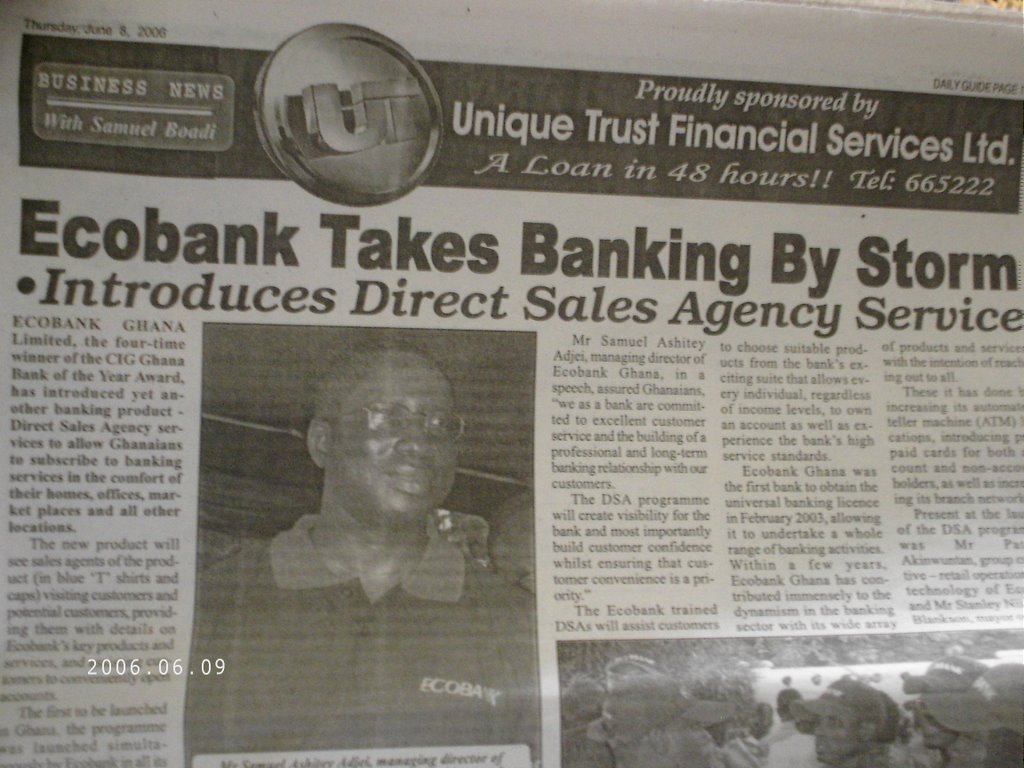
    The practicalities behind this new revelation might be a bit more problematic than the semantics; nonetheless, it is heart-warming that an attempt to make regional integration palpable -- in the way the regional bank ECOBANK has by way of its recent product, the so-called DSA, or Direct Sales Agency Service, where potential customers on ECOBANK products are targetted in their homes, offices, etc -- is being made more comprehensively.

    According to Justice Donlie, teh Court "shall grant audience to member states and the member states may file actions on behalf of the nationals of the member states against other member states or institutions in respect of the interpretation and application of the treaties of the community".

    Mind you, it was as far back as 2005 that, according to an article on the WILDAF site here, individuals were granted access to the Court. The amendment on the protocol was made in August 2004.

    Wednesday, June 14, 2006

    Excitement Reigns Supreme in Ghana as Black Stars Play Italy this Evening


    Over the past couple of weeks, many column inches have been dedicated to praising the Black Stars over their possible defeat of the Italian Azzuri in the FIFA 2006 World Cup. Considering Ghana is in the World Cup for the first time ever, pundits might speculate wrongly and dismiss the Ghanaian team as underdogs. They might just be in for a surprise--if excerpts from the article below is anything to go by:


    Ghana's strong point is a solid midfield manned by captain Stephen Appiah, Chelsea star Michael Essien and Sulley Muntari, who, like Appiah knows the Italian league well.

    The World Cup debutants go into the contest brimming with confidence. 'We're strong enough to reach the semi-finals,' coach Ratomir Dujkovic said.

    'We're not here just to take part - we're here to succeed. Every team that plays against us must suffer if they are to beat us.'

    But all the confidence doesn't stop them realistically giving the tag of favourites to Italy. 'We're not under pressure,' said Appiah.

    'We've nothing to lose - we're in a World Cup for the first time, while Italy are three times champions,' said Kuffour, the long- time Bayern Munich defender who switched last year to AS Roma.


    from: http://sport.monstersandcritics.com/worldcup2006/news/article_1171894.php/Totti_doubt_ahead_of_Italys_opener_against_Ghana

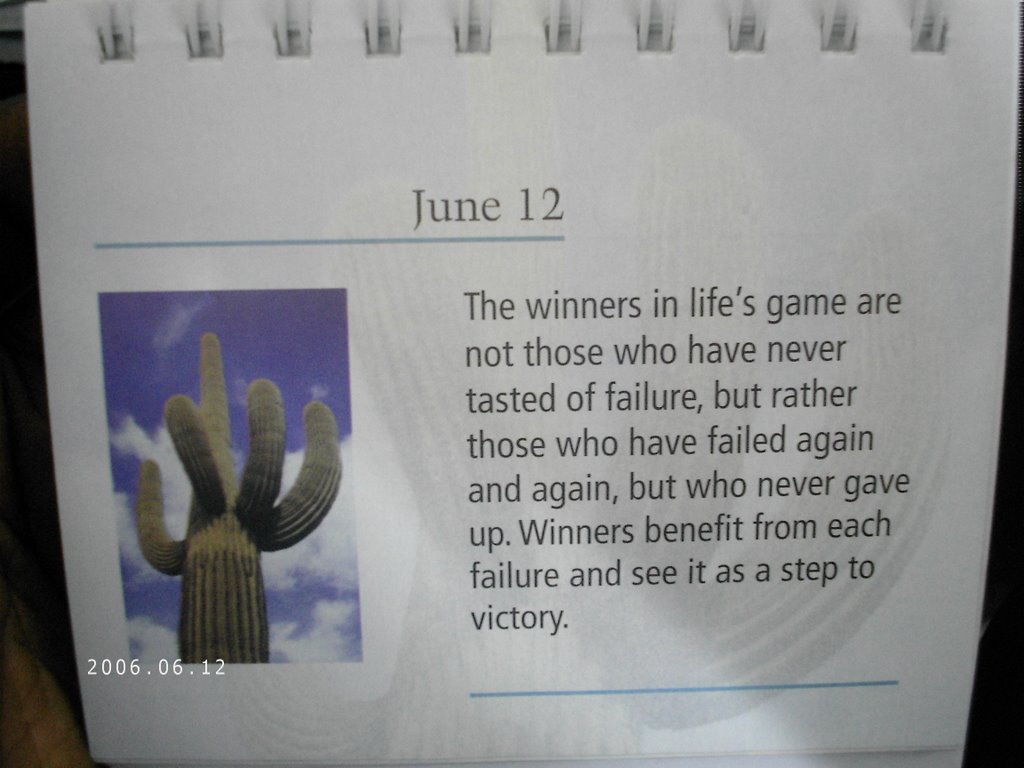
    I am thinking that the quote for the day on my desk is very apt for today's game. Dontcha think?:-))

    SITE OF THE DAY


    Here is the link to the whole Ghana Black Stars squad!:-):

    1 ADJEI Sammy (GK)
    2 SARPEI Hans
    3 GYAN Asamoah
    4 KUFFOUR Samuel
    5 MENSAH John
    6 PAPPOE Emmanuel
    7 SHILLA Illiasu
    8 ESSIEN Michael
    9 BOATENG Derek
    10 APPIAH Stephen
    11 MUNTARI Sulley
    12 TACHIE-MENSAH Alex
    13 MOHAMED Habib
    14 AMOAH Matthew
    15 PANTSIL John
    16 OWU George (GK)
    17 QUAYE Daniel
    18 ADDO Eric
    19 PIMPONG Razak
    20 ADDO Otto
    21 ISSAH Ahmed
    22 KINGSTON Richard (GK)
    23 DRAMAN Haminu

    Monday, June 12, 2006

    FW: Why Ghana must win the FIFA World Cup

    Creative Storm is an Accra-based Multimedia services company. As the Germans get ready to face the Costa Ricans very soon, this is interesting food for thought sent in by the big boss of that company…


    Enjoy!


    From: Creative Storm [mailto:creativestorm@4u.com.gh]
    Sent: vendredi 9 juin 2006 15:02
    To: Creative Storm
    Subject: Why Ghana must win the FIFA World Cup


    There comes a time in the life of our planet when a momentous event literally stops time and all mortals are duty bound to watch 22 grown men kick a ball about to great frenzy and spectator madness, until and with spectacular funfair a gold cup is raised to cheers and tears or worse. The event, ladies and gentlemen is upon us, starting from today. You could be excused not to have noticed if you were a visitor from Mars because frankly, there is no where on earth to escape this ritual. Not even in America where the grown men prefer to pass the ball by hand rather than kick it or if you were God himself reincarnated as Madonna . The only man to score with his hand and deprive England of possible glory.  


    You are probably wondering by now the point of this email. Perhaps you are conspiring to leave work early to beat the Friday traffic to pick up a new TV set or sneak to the supermarket to stack up the beer,confirming industry research that we are all losers except the famous players who will rack in even more ridiculous sums of money, TV manufacturers, ticket touts, beer companies and self appointed football pundits, who see a fast buck or Euro this time of the year in correctly pronouncing Ronaldino, Appiah or Gustavo - which I understand is the most common surname at this year's world cup? Can't possibly be true but the real question is, can the world afford the world cup? I don't think so. All bosses and office managers are bound to notice slower moving brain cells, distracted workers except glued to the TV set screaming goal! goal! goal!  - which can drive the rest of the office crazy. Threats of divorce and family disputes will rise with fist fights over TV switch ownership. Where are all the defenders of the family? Have they all been bought hook wink and sinker by the mindless world cup circus?


    A few brave journalists have suggested that all companies must declare a three week holiday in all soccer crazy countries. The alternative, they claim is a shape rise in workers calling in sick, taking the injured dog to the vet or not venturing out to work to avoid a tsunami or measles.  


    If I believe that the world cup is not good for the world, why the title of this email. Simply and humbly put, I believe that we must make an exception and support the Black Stars to win this year's world cup. Some have said we deserve it because this is our first time. That is patronising. Unlike any other country in the competition, Ghana deserves to win the cup for very good reasons - in fact, as a true patriotic  and well meaning Ghanaian who believes in ' seeing someone to see what can be done' I have been cracking my brains to 'see' exactly what. Won't it be a great present for our 50th anniversary next year, if only to remind ourselves that we are still young, the best and not approaching a mid life crisis?  As a proud Ghanaian, I also believe in miracles. If you would join me in prayers and fasting, the Italian goal keeper would see several balls instead of one anytime Essien approaches. I started praying last week and the news so far has been fantastic. I read with shameless joy that key Italian defenders are falling sick or succumbing to injury. More will fall on the pitch as Ghanaian supporters sing the famous Ghanaian refrain for all occasions, "Da no ase, da no ase, da onyame ase" (praise him, praise God,praise God).  I don't mean the diasporan supporters in Germany or those coming from London. I mean bona fide Ghanaian patriots from Chorkor and Mamobi, those who managed to run the German visa gauntlet and landed in Deutschland.


    Prayers and incantations from Kpandu, Nyamuransa or Larteh may work on lesser teams but what if we come face to face with Brazil in the finals? That prospect is daunting and frankly frightening.  Nevertheless, apart from believing in miracles, which may be of limited value against Ronaldo and Ronaldino, the Ghanaian is resourceful. I trust that Essien, Appiah and the rest of the boys have Ananse in their bones and will pull some real surprises. You may think I have converted to hopeless optimism but even Dujkovic, the strangely pessimistic coach is now learning to sing "Da no ase.." in preparation for the Accra victory parades. We have edited a Pepsi advert in support of Ghana, now playing on TV, hopefully until the boys lift high the cup on 9th July. Are we dreaming? Only optimists may respond.  


    Kwesi Owusu


    Saturday, June 10, 2006

    FW: Why Ghana must win the FIFA World Cup

    Creative Storm is an Accra-based Multimedia services company. As the Germans get ready to face the Costa Ricans very soon, this is interesting food for thought sent in by the big boss of that company…


    Enjoy!


    From: Creative Storm [mailto:creativestorm@4u.com.gh]
    Sent: vendredi 9 juin 2006 15:02
    To: Creative Storm
    Subject: Why Ghana must win the FIFA World Cup


    There comes a time in the life of our planet when a momentous event literally stops time and all mortals are duty bound to watch 22 grown men kick a ball about to great frenzy and spectator madness, until and with spectacular funfair a gold cup is raised to cheers and tears or worse. The event, ladies and gentlemen is upon us, starting from today. You could be excused not to have noticed if you were a visitor from Mars because frankly, there is no where on earth to escape this ritual. Not even in America where the grown men prefer to pass the ball by hand rather than kick it or if you were God himself reincarnated as Madonna . The only man to score with his hand and deprive England of possible glory.  


    You are probably wondering by now the point of this email. Perhaps you are conspiring to leave work early to beat the Friday traffic to pick up a new TV set or sneak to the supermarket to stack up the beer,confirming industry research that we are all losers except the famous players who will rack in even more ridiculous sums of money, TV manufacturers, ticket touts, beer companies and self appointed football pundits, who see a fast buck or Euro this time of the year in correctly pronouncing Ronaldino, Appiah or Gustavo - which I understand is the most common surname at this year's world cup? Can't possibly be true but the real question is, can the world afford the world cup? I don't think so. All bosses and office managers are bound to notice slower moving brain cells, distracted workers except glued to the TV set screaming goal! goal! goal!  - which can drive the rest of the office crazy. Threats of divorce and family disputes will rise with fist fights over TV switch ownership. Where are all the defenders of the family? Have they all been bought hook wink and sinker by the mindless world cup circus?


    A few brave journalists have suggested that all companies must declare a three week holiday in all soccer crazy countries. The alternative, they claim is a shape rise in workers calling in sick, taking the injured dog to the vet or not venturing out to work to avoid a tsunami or measles.  


    If I believe that the world cup is not good for the world, why the title of this email. Simply and humbly put, I believe that we must make an exception and support the Black Stars to win this year's world cup. Some have said we deserve it because this is our first time. That is patronising. Unlike any other country in the competition, Ghana deserves to win the cup for very good reasons - in fact, as a true patriotic  and well meaning Ghanaian who believes in ' seeing someone to see what can be done' I have been cracking my brains to 'see' exactly what. Won't it be a great present for our 50th anniversary next year, if only to remind ourselves that we are still young, the best and not approaching a mid life crisis?  As a proud Ghanaian, I also believe in miracles. If you would join me in prayers and fasting, the Italian goal keeper would see several balls instead of one anytime Essien approaches. I started praying last week and the news so far has been fantastic. I read with shameless joy that key Italian defenders are falling sick or succumbing to injury. More will fall on the pitch as Ghanaian supporters sing the famous Ghanaian refrain for all occasions, "Da no ase, da no ase, da onyame ase" (praise him, praise God,praise God).  I don't mean the diasporan supporters in Germany or those coming from London. I mean bona fide Ghanaian patriots from Chorkor and Mamobi, those who managed to run the German visa gauntlet and landed in Deutschland.


    Prayers and incantations from Kpandu, Nyamuransa or Larteh may work on lesser teams but what if we come face to face with Brazil in the finals? That prospect is daunting and frankly frightening.  Nevertheless, apart from believing in miracles, which may be of limited value against Ronaldo and Ronaldino, the Ghanaian is resourceful. I trust that Essien, Appiah and the rest of the boys have Ananse in their bones and will pull some real surprises. You may think I have converted to hopeless optimism but even Dujkovic, the strangely pessimistic coach is now learning to sing "Da no ase.." in preparation for the Accra victory parades. We have edited a Pepsi advert in support of Ghana, now playing on TV, hopefully until the boys lift high the cup on 9th July. Are we dreaming? Only optimists may respond.  


    Kwesi Owusu


    Friday, June 09, 2006

    What a Rainy Day!!! Presaging a victory for the Black Stars in Ghana-Italy gamae on Monday?

    till Monday!

    Powered by Castpost

    Thursday, June 08, 2006

    Thankyou all You visitors, but PLEASE LET ME KNOW...

    …which country you are from by placing you pin on the BRAVENET GUEST MAP.


    You can find it above this:


    2 Extracts of My Favourite Ghanaian Song for 2005 (Most Popular in Ghana as of mid-2005)-- Kwabena-Kwabena


    Thankyou!!!


    Wednesday, June 07, 2006

    Such a Sunny Day!


    I really did not feel like getting out for lunch this afternoon! Whatever happened to the rainy season that was supposed to be here?!!

    Tuesday, June 06, 2006

    Friday, June 02, 2006

    Nana Amma's coffin enters the hearse in preparation for Osu cemetery. Taken 27/05/2006

    Powered by Castpost

    LinkWithin

    Blog Widget by LinkWithin

    Footer Fancies

    eXTReMe Tracker Who Links Here
    Brochure Design - Small Business Bible
    Brochure Design

    CONTENT Copyrighted ©E.K.BENSAH II PRODUCTIONS. 1998-2010

    BlogCatalog / StumbleUpon

    My Photo Gallery

    BlogCatalog Stuff!